

Fossilised wood
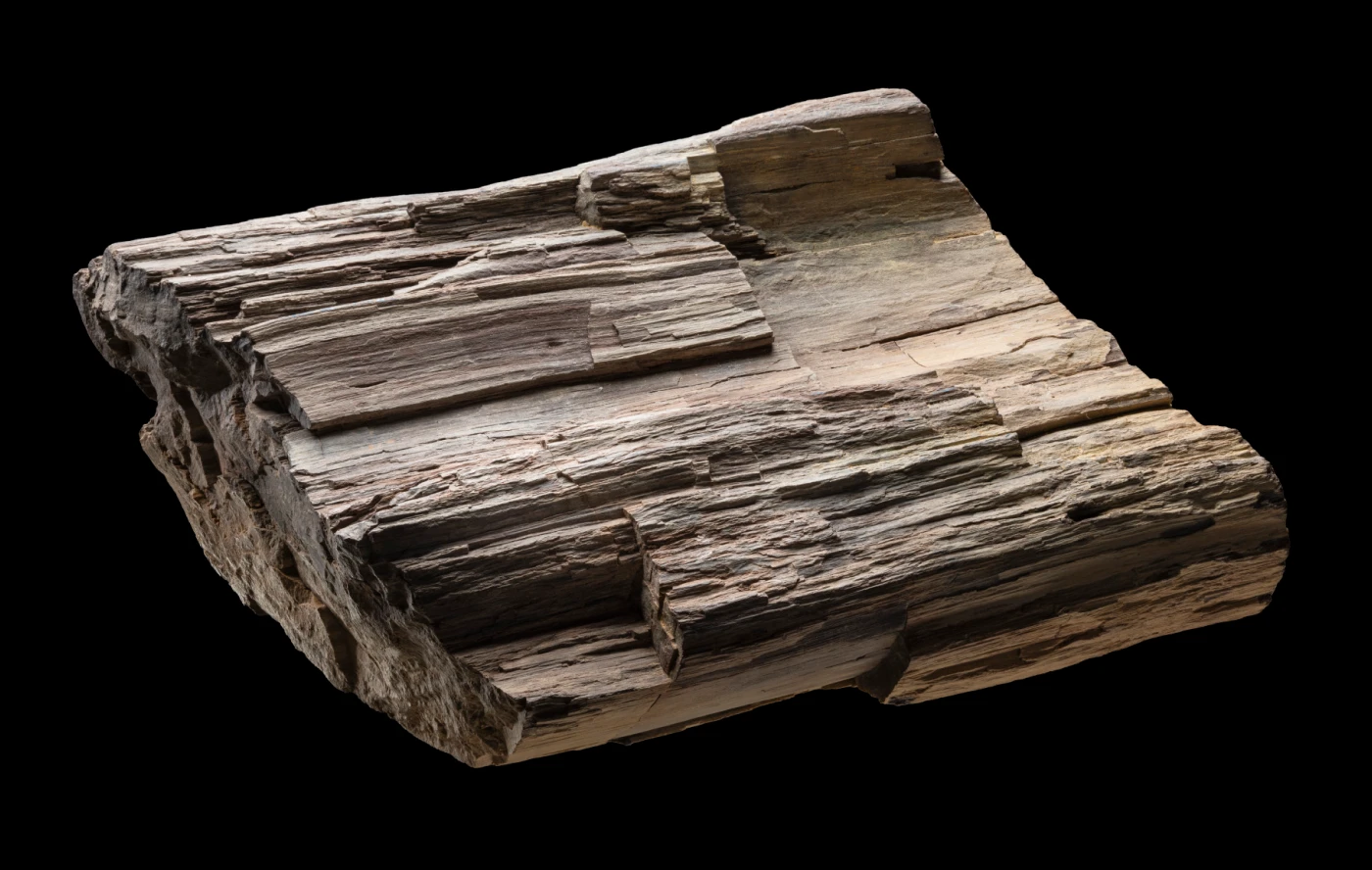
It’s a tough call to pick just one favourite object in a collection that is so varied and interesting. I think that the fossilised tree trunk is compelling.
It’s from an ancient tree (Glossopteris) and was formed over millions of years through a process of permineralisation, where organic material is replaced by minerals.
It is evidence of a time when Antarctica formed part of the supercontinent Gondwana and was teeming with lush forests and animal life.
Antarctica and Gondwana
After coming together over a period of 100 million years, starting 160 million years ago, Gondwana gradually broke up. Australia and Antarctica shifted apart and formed separate continents.
As Australia drifted north, the Southern Ocean’s circumpolar circulation developed, isolating Antarctica from the rest of the world. Over time the Antarctic icesheet formed, removing most vegetation.
This specimen was discovered in sedimentary rocks of the Permian period, 251–298 million years ago, at Pagodroma Gorge, a deep-sided gorge in the northern Prince Charles Mountains, about 320 kilometres southeast of Mawson station.
It’s a special object, demonstrating the deep and enduring connection between Australia and Antarctica.
This team favourite is from The Museum magazine. Buy the special Antarctica issue