
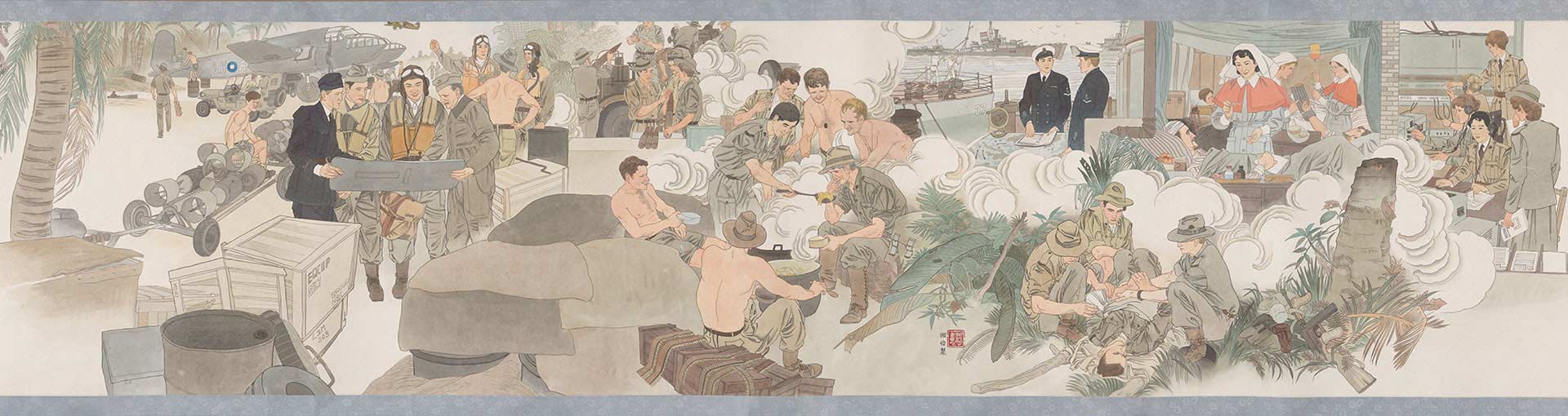
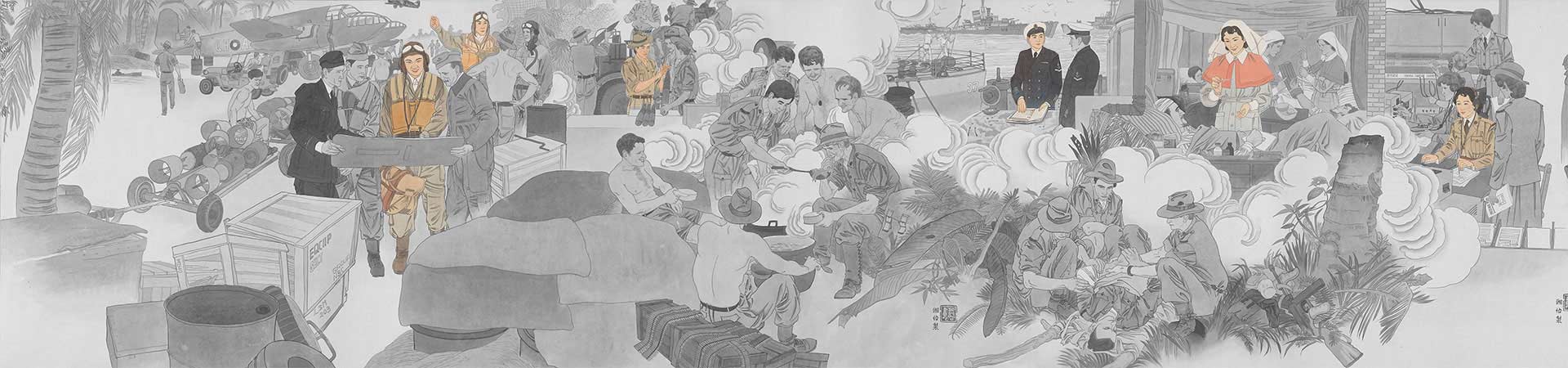
Scene 15 (right to left)
Many Chinese Australians have represented Australia in times of conflict. Depicted in this scene are servicemen and women who served during the Second World War: Eunice Chinn, Australian Army Signal Corps; Phillis Anguey, senior sister in the Royal Australian Air Force Nursing Service; Bo Liu, Royal Australian Navy, who served on the HMAS Nizam; Roy Goon, squadron leader, 83rd Squadron Royal Australian Air Force; Thomas See, who served with 461 and 224 squadrons; and Reginald Long, who served with artillery regiments, 2nd Australian Imperial Forces.
Chinese Australians in war
Hundreds of Chinese Australians have served with Australian forces from the time of the Boer War to the recent peacekeeping campaigns. During the Second World War many Australians of Chinese origin enlisted in the Australian armed forces. It is estimated that there were probably more Chinese serving in the Australian forces than any other minority group in Australia.
Women of Chinese descent also served. Phillis Anguey was a senior sister in the Royal Australian Air Force Nursing Service (RAAFNS) from 1940 to 1945, and Eunice Chin worked in the Australian Army Signal Corps.
Contribution to the war effort
Thomas See was the first Australian of Chinese origin to enter the Royal Australian Air Force. He later served as a bombing leader in Europe and flew long-range aircraft over the Atlantic.
In 1943 Roy Goon became a squadron leader commanding the 83rd Squadron in the Royal Australian Air Force.
Bo Liu enlisted with the Royal Australian Navy and was later appointed captain’s secretary.
Chinese Australians also made a valuable contribution to the war effort by meeting the demand for labour to build landing barges at the American military base in Brisbane. One hundred and seventy Chinese men moved from Sydney to Brisbane to work on the project.
Notable figures
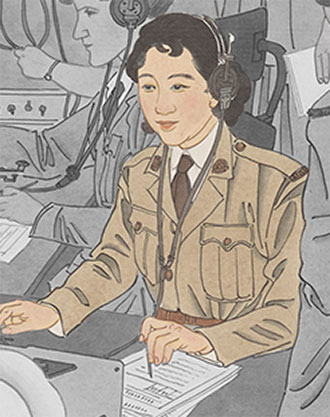
Eunice Chinn
Served in the Australian Army Signal Corps during the Second World War.
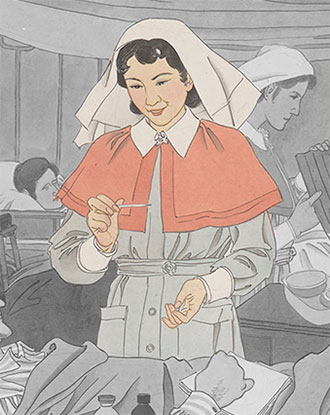
Phillis Anguey
A senior sister in the Royal Australian Air Force Nursing Service (RAAFNS) from 1940 to 1945.
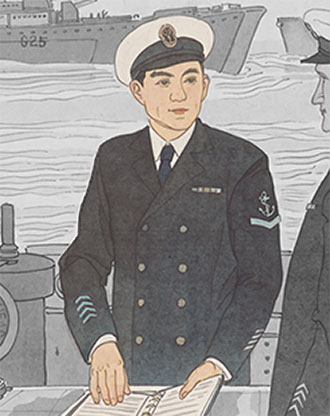
DG 'Bo' Liu
Served in the Royal Australian Navy on the HMAS Nizam during the Second World War.
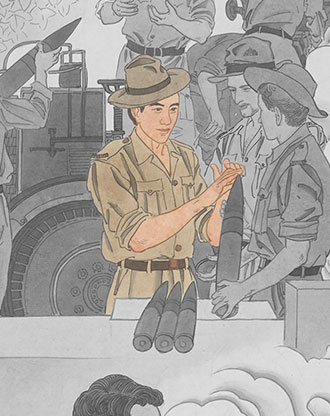
Reginald Long
Served with artillery regiments, 2nd Australian Imperial Forces.
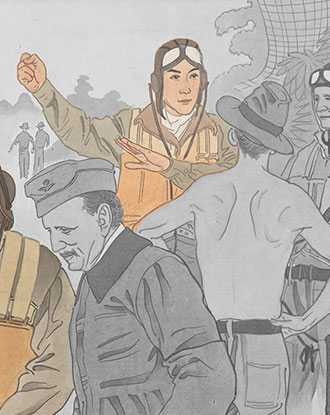
Roy Goon
A flying instructor employed by the Royal Victorian Aero Club and a distinguished squadron leader in the Royal Australian Air Force.
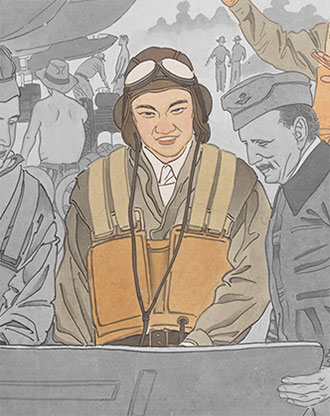
Thomas See
First Australian of Chinese origin to enter the Royal Australian Air Force, attained the rank of Flying Officer.