Skip to content
  • 9am–5pm
  • Free general admission

Antarctica – audio descriptions

Hear audio descriptions and exhibition labels for key objects from the Antarctica exhibition. For visitors with additional vision needs.
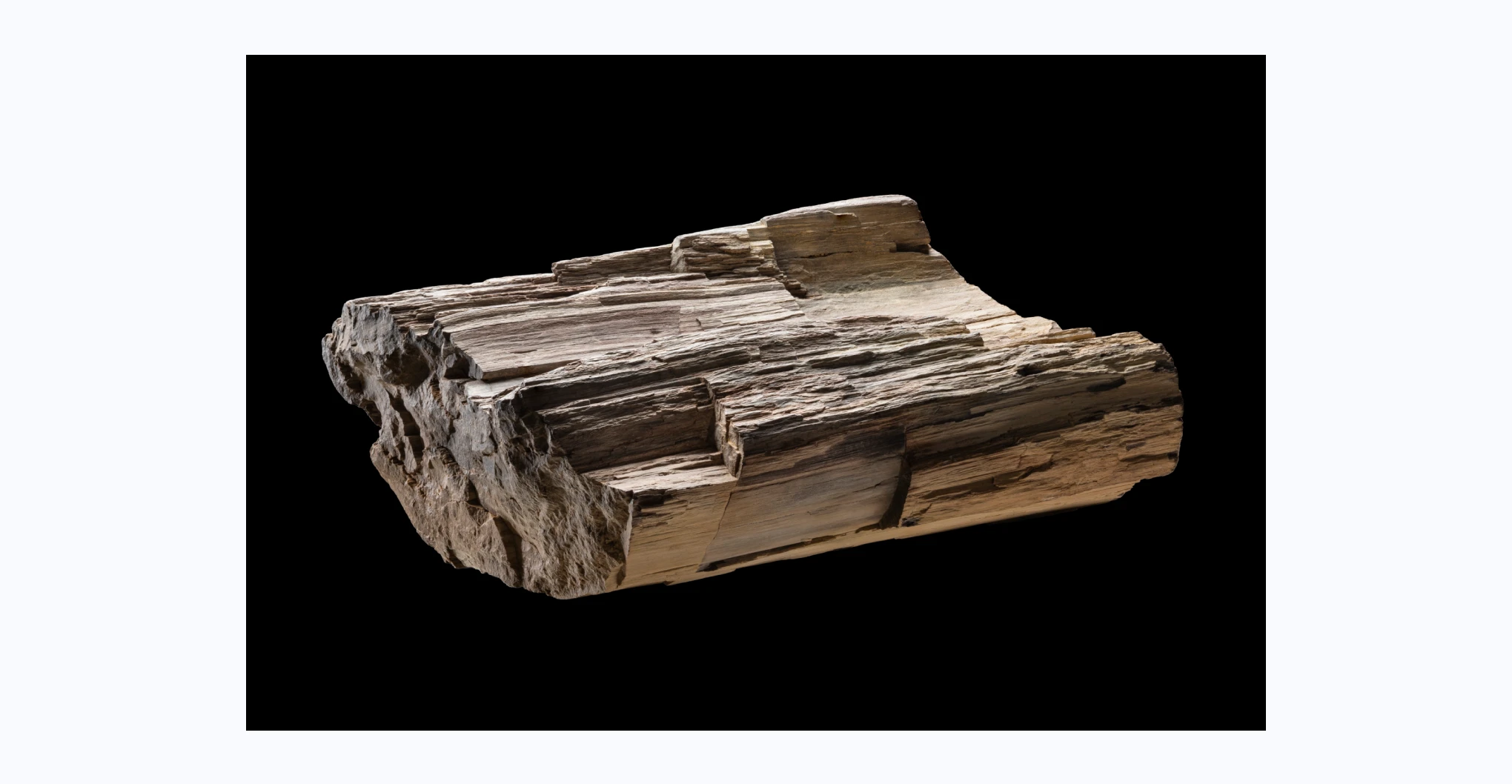
 A cream, brown and grey piece of fossilised tree trunk. The trunk is semi-circular with an indent running down the centre. There are cracks in the stone along the rings of the tree, and traces of blue paint across the top.
Fossilised Glossopteris wood, from 251–298 million years ago, found in East Antarctica
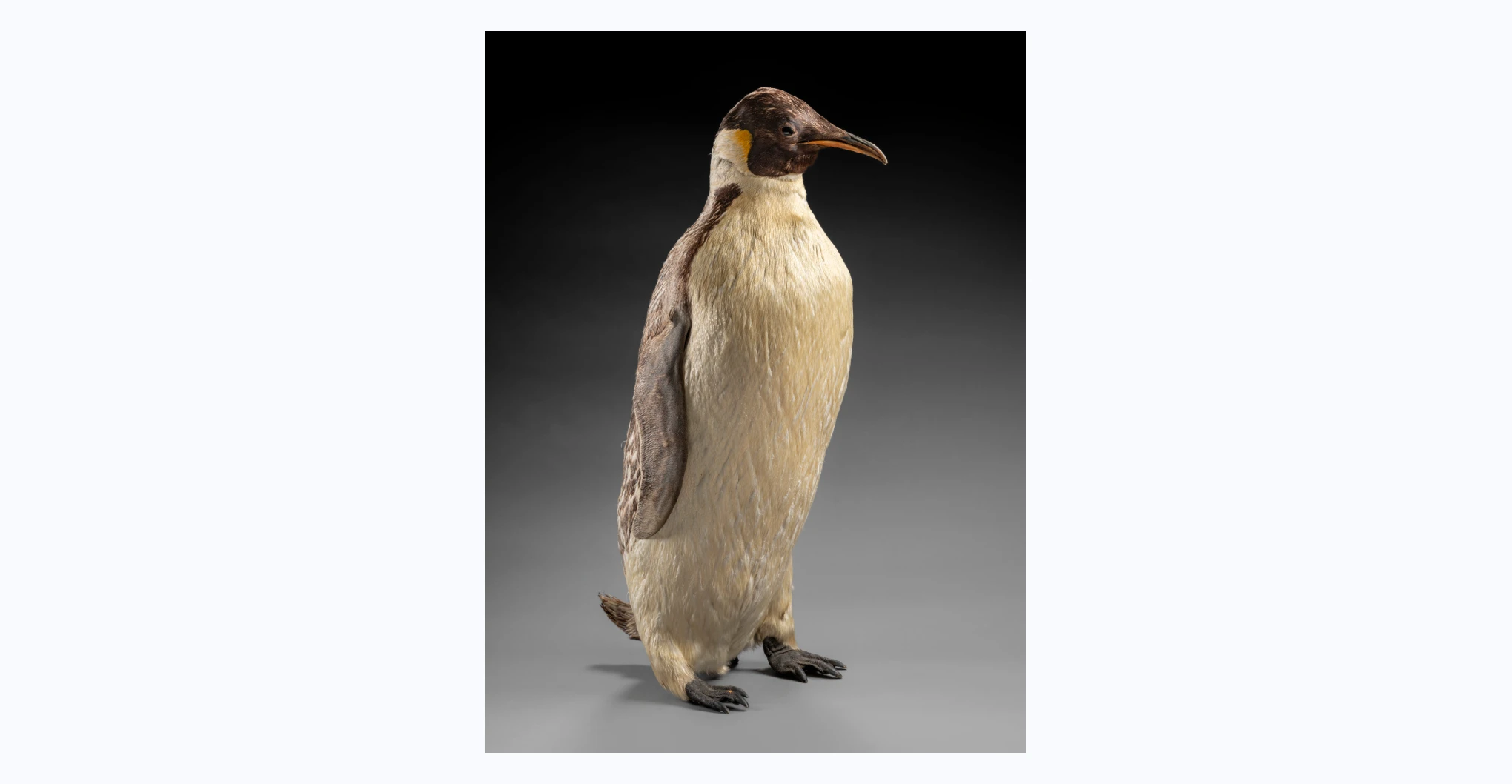
 A taxidermied emperor penguin (Aptenodytes forsteri) in a standing position. Its head is turned to its left. Its beak is closed and its flippers are by its sides. It is evenly coloured on the chest and front body, and the feather colour is faded overall. The back of the specimen is slightly open, showing the internal webbing.
Emperor penguin, 1990s
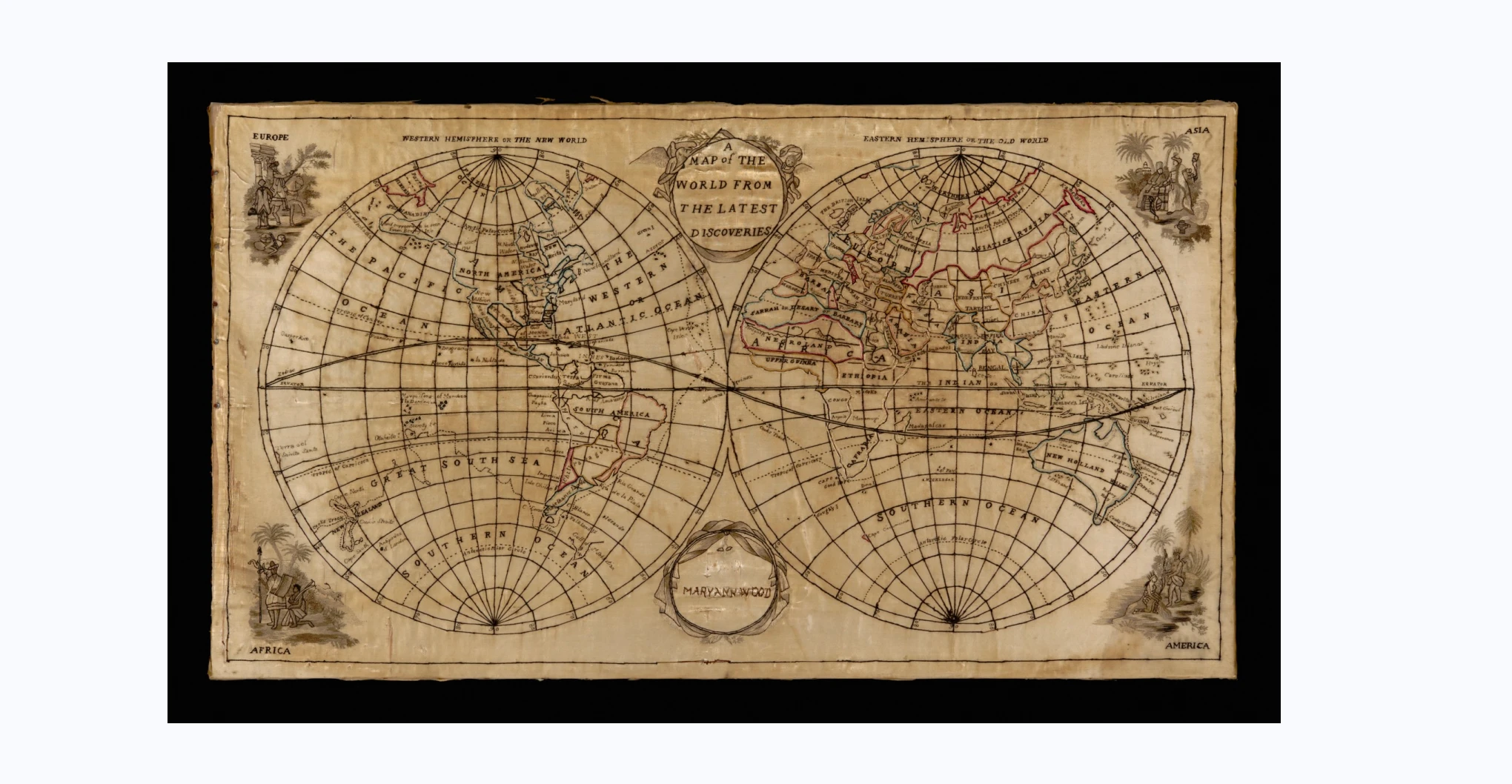
 A silk embroidery depicting a double hemisphere map of the world on silk fabric, backed with cotton fabric and mounted on wooden stretchers accompanied by a rectangular wooden frame. The embroidery is titled 'A / MAP of THE / WORLD FROM / THE LATEST / DISCOVERIES', and signed 'MARY ANN WOOD'. In each corner on the map are images labelled 'ASIA', 'AMERICA', 'AFRICA' and 'EUROPE'. The frame features traces of gold paint on the front, and remnants of newspapers as well as two metal loops and rings attached to the back. Accompanying the frame is an assortment of metal nails.
Embroidered world map, 1770s
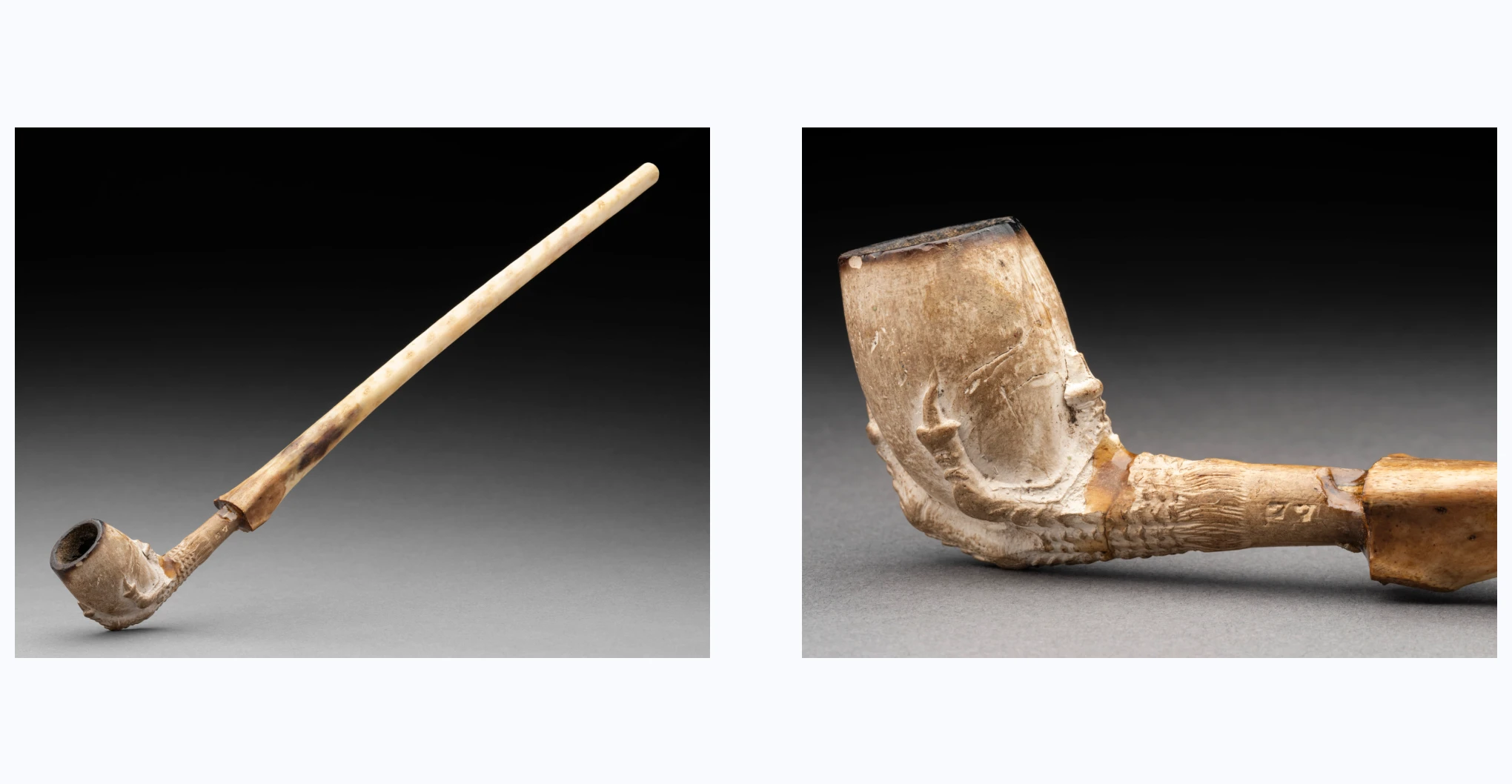
 A pipe with a clay bowl and shank, and a bird bone stem. The shank has been moulded to look like the foot of a bird with the claws cupping the bottom of the bowl. Impressed into the side of the shank is '77'. The end of the shank is inserted into one end of a cream wing bone which has dark brown marks across the surface of the same end. The two pieces are secured with a clear adhesive. The same adhesive is also present around a crack near the base of the bowl. The inside and the rim of the bowl are stained dark brown.
Pipe with bird bone stem, 1870s–90s. Donated by the Dean family
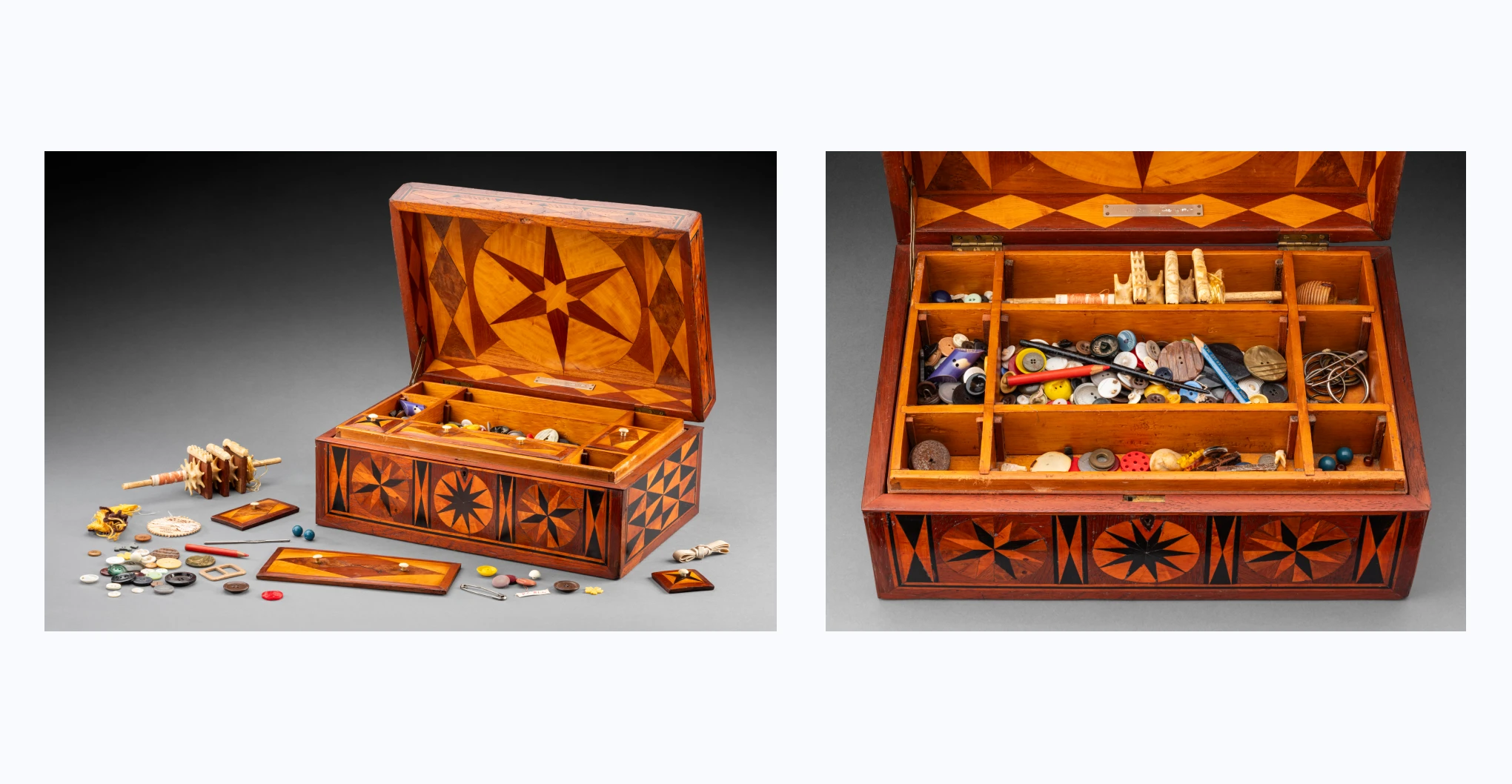
A rectangular wooden sewing box accompanied by various contents. The wooden box is inlaid with flower designs accompanied by diamond and triangle patterns. There is a metal keyhole in the front and the lid is hinged. The interior of the lid features an inlaid design and a metal plate etched with 'Capt. / J.K.DAVIS,
Sewing box, 1910s. Made by James Davis from Tasmanian timbers. Donated through the Australian Government’s Cultural Gifts Program by Trevor Kennedy
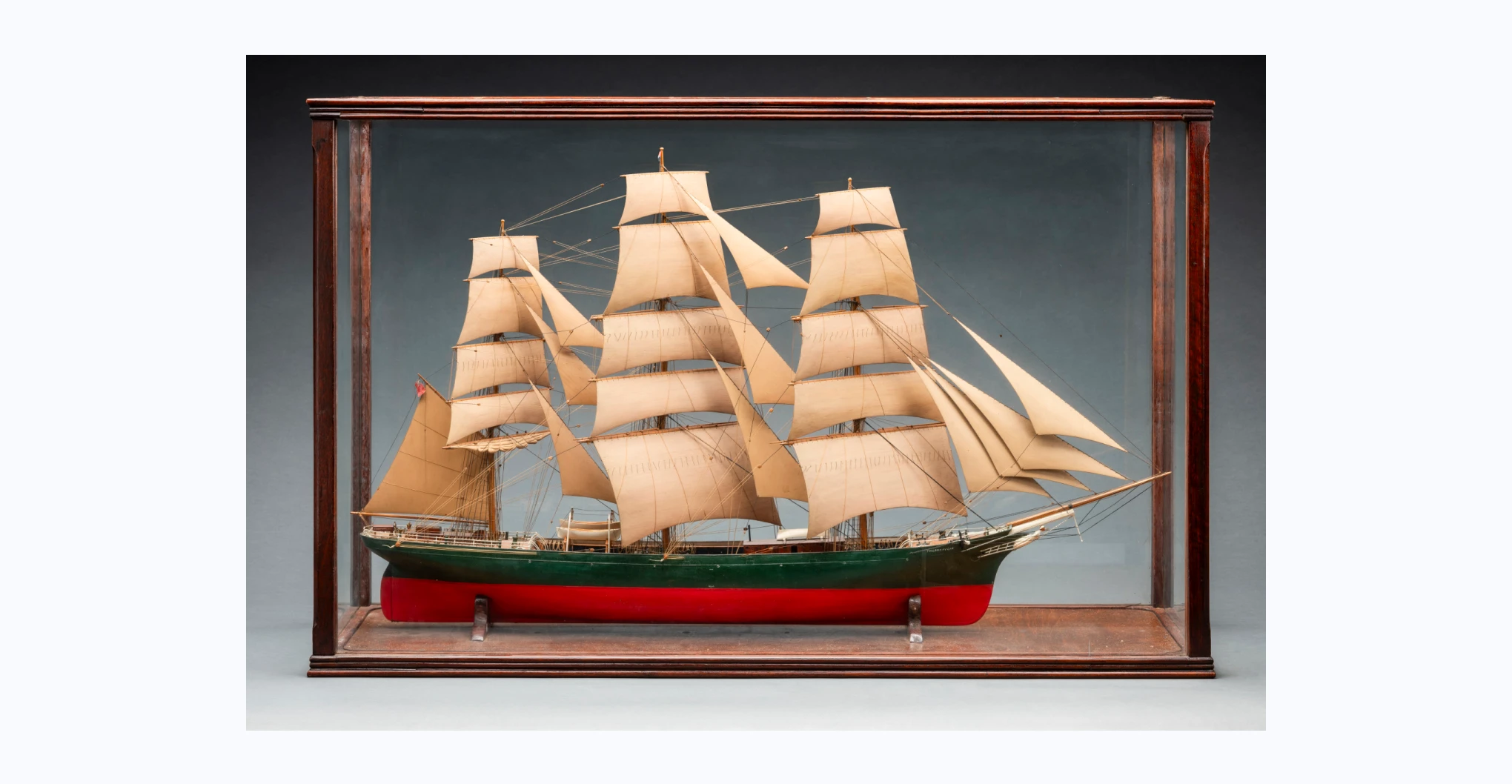
 A model of a green and orange-red ship featuring three masts and three white lifeboats. Painted in white on both sides is the word 'THERMOPYLAE'. The ship is housed in a timber case with glass sides.
Model of clipper Thermopylae, 1970s. Donated through the Australian Government's Cultural Gifts Program by Trevor Kennedy
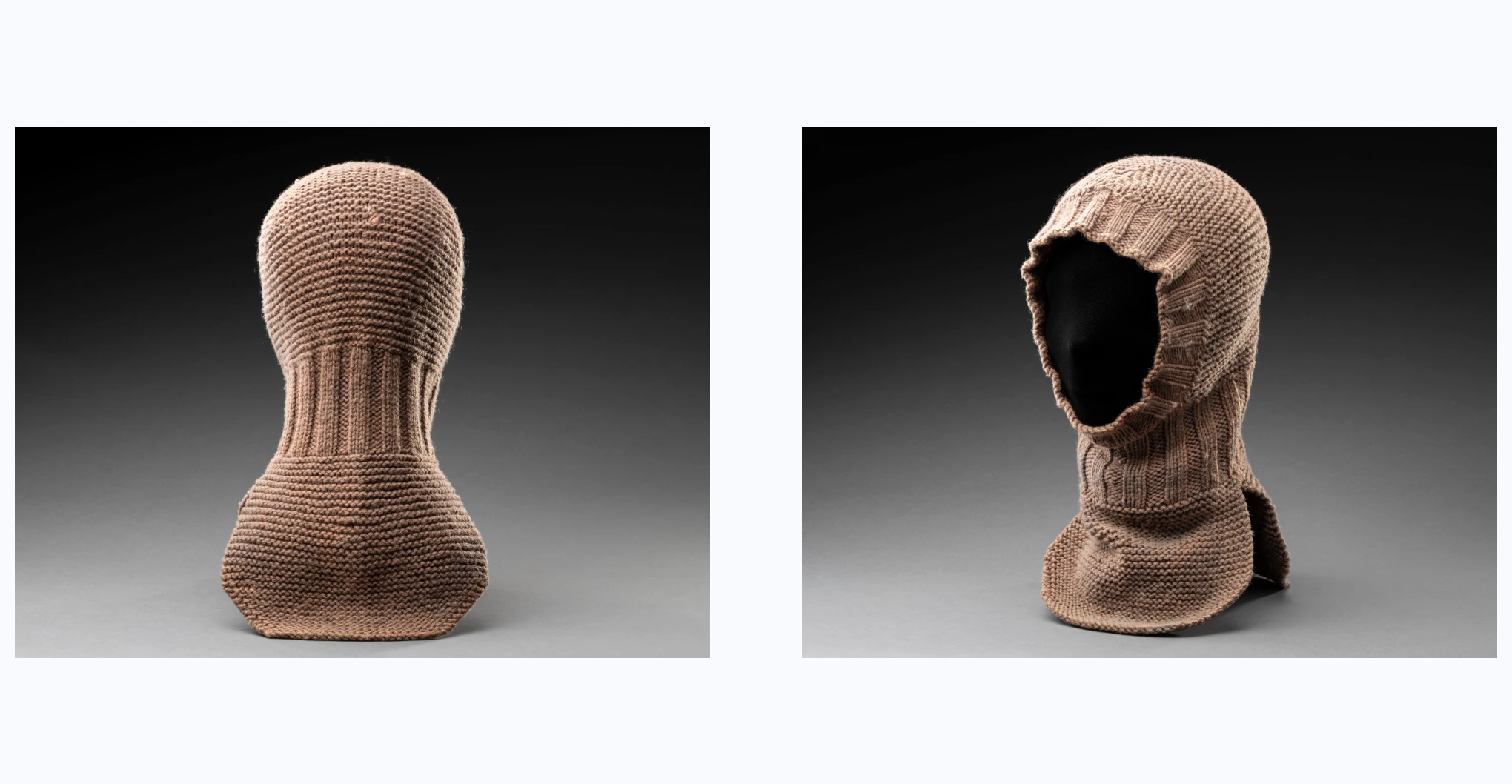
 A grey-brown coloured knitted balaclava. It consists of plain stitching in most areas, and ribbed stitching around the face opening and neck. There is a front and slightly larger back flap in plain stitch below the chin line.
Balaclava worn by Tannatt Edgeworth David, 1907–09. Donated by Anne Godfrey-Smith
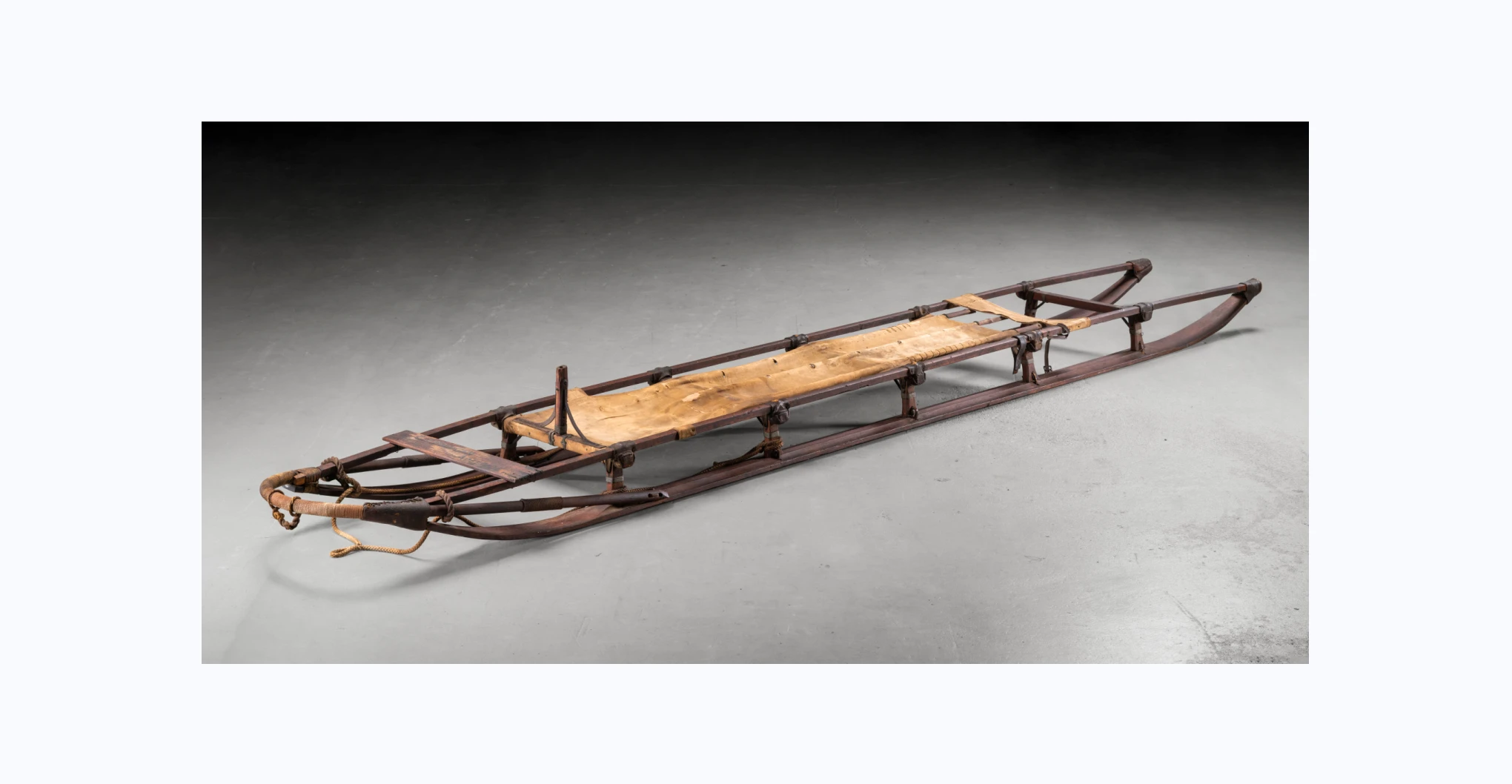
Dog sled used by Cecil Madigan in Antarctica, 1911–13. Donated by the Madigan family
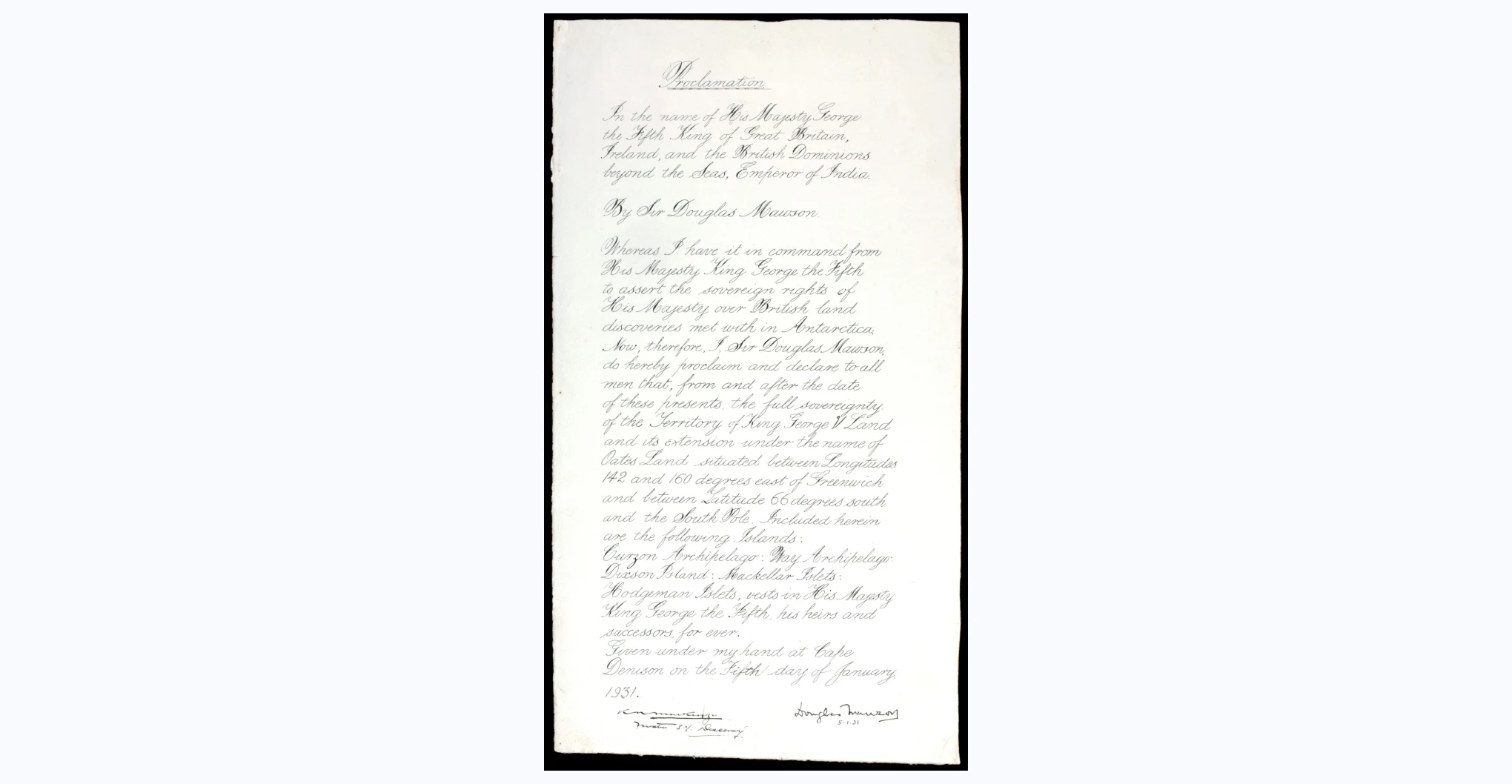
 A proclamation written on rag paper in copperplate by A L Kennedy, a physicist in Mawson's party, and signed by Sir Douglas Mawson, dated 5-1-31.
Proclamation, 1931
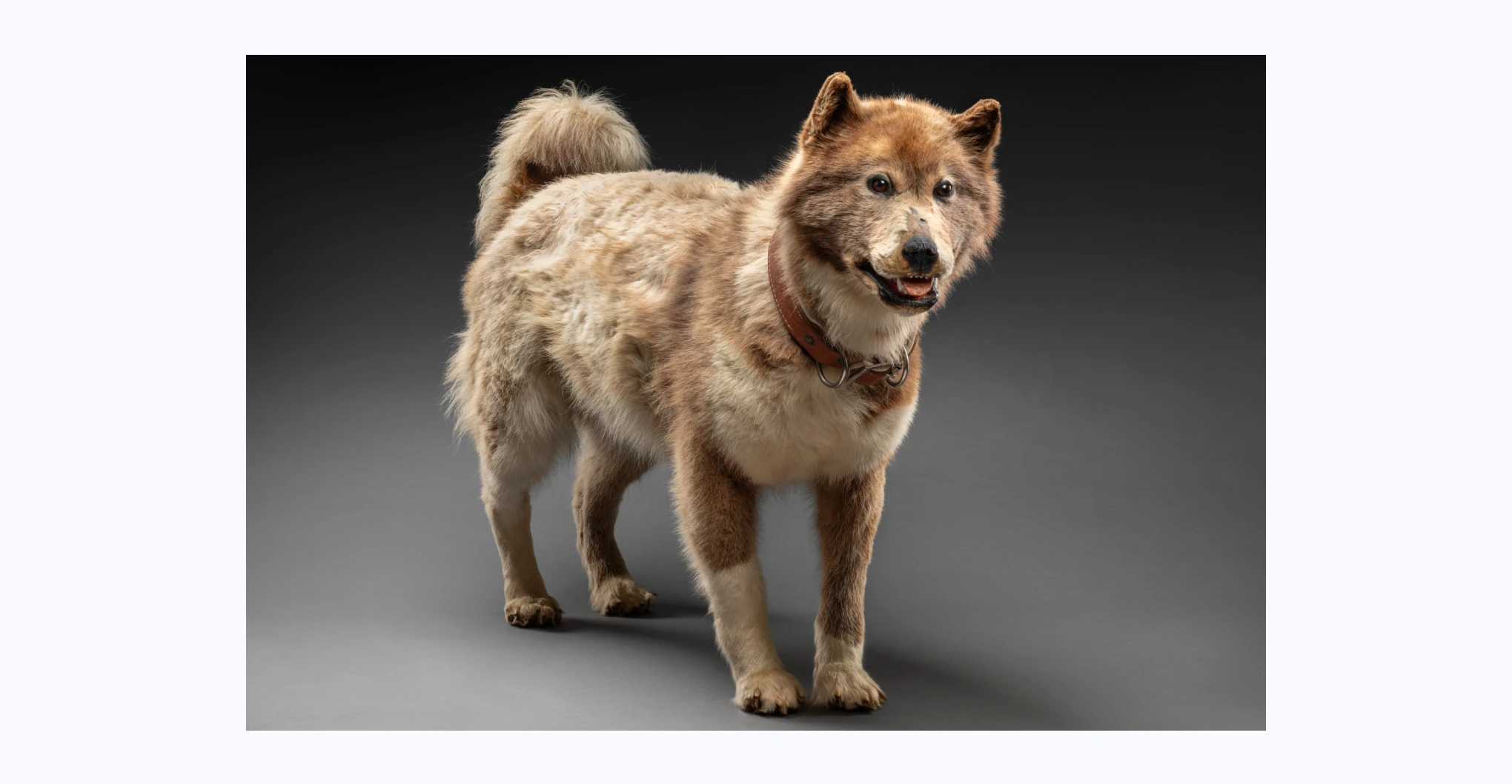
 A taxidermied husky dog 'Shep' with a stamped aluminium name tag fastened to his leather collar. The dog is standing, his mouth is open and he is looking a little to his right. He has light coloured fur with darker areas around his head, shoulders and tail. The taxidermied specimen is mounted on a fibreglass frame.
Sled dog Shep, 1980s–90s
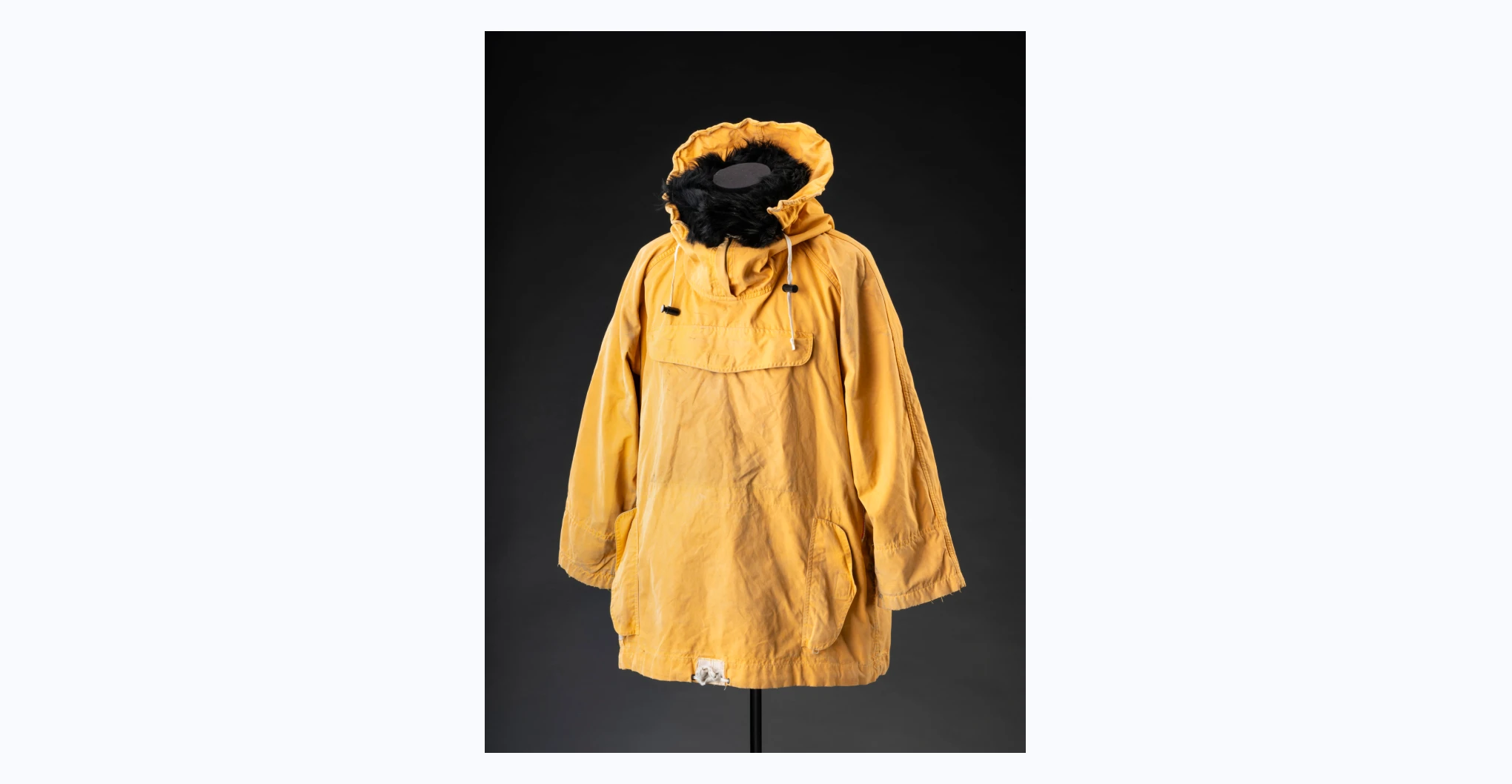
 A yellow cotton Ventile jacket with a wired hood that has black fur, a zipper and drawstrings. It has a zip-up pocket with a velcro closure at the centre of the chest, zip-up access points on the left and right side, and smaller zip-up pockets with flaps and velcro closures on the lower left and right side. The interior of the jacket is lined with green cotton fabric. Sewn to the back of the neck is a cloth label with black text reading 'KINDRED MANUFACTURING / PTY. LTD. / SIZE SM / MADE IN AUSTRALIA / NAME'.
Ventile jacket, 1988. Donated by Diana Patterson
An Australian National Antarctic Research Expedition first aid kit. The kit is housed in a red and pink rectangular cardboard box with a slide-out tray, and its contents are described on a printed label on the lid. Some of the described contents are missing from the kit. Included are four plastic sachets of tablets: Ronicol for frostbite, Gelusi for indigestion, Saridone for headaches, and salt for cramps. Also included are a tube of eye ointment for snow blindness, an ampule of Tubinic Omnopon Grs for severe pain, three Elastoplast strips and one adhesive patch. Along the top of the label is faded handwritten text in black ink that reads 'SAMPLE ONE [...?] MEDICATION'. Handwritten in pencil on the bottom is 'MB Pittman / MB 4411'.
First aid kit, 1960
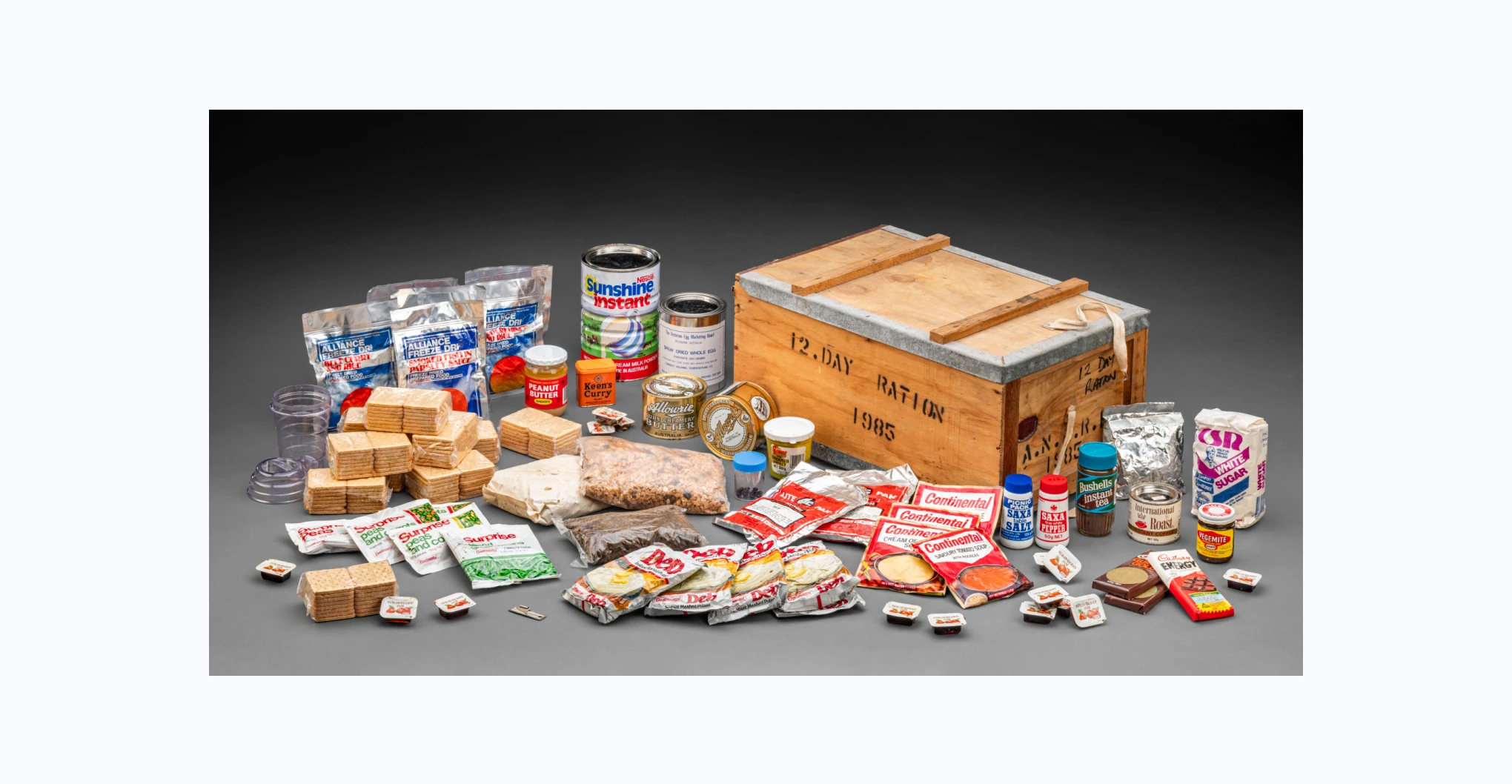
A wooden crate with a hinged lid containing various rations. The edges of the lid are reinforced with metal and the lid can be secured closed via two lengths of cotton tape. Stencilled in black on the crate is '12. DAY RATION / 1985' and 'A.N.A.R.E. / 1985'. There is also handwriting in black that reads '12 DAY / RATION'. The rations include a salt shaker, a pepper shaker, four satchets of Continental freeze dried soup, 10 packets of Swallow's biscuits, six packets of Alliance freeze dried meals, two packets of Alliance freeze dried rice, two packets of dried onions, five packets of Continental dried vegetables, a jar of Vegemite, a container of Keen's curry powder, a tin of instant coffee, a tin of Nestlé milk powder, a tin of dried egg powder, two tins of Allowrie butter, three blocks of Cadbury chocolate, a bag of dried fruit, a bag of cereal, a bag of muesli, a bottle of Bushells tea powder, a jar of smooth peanut butter, a jar of 12 black pills, a container of creamed honey, a bag of CSR sugar, 15 packets of Kraft strawberry jam, a plastic shaker bottle, a metal can opener, and five packs of Deb instant mashed potato.
Field ration pack, 1985
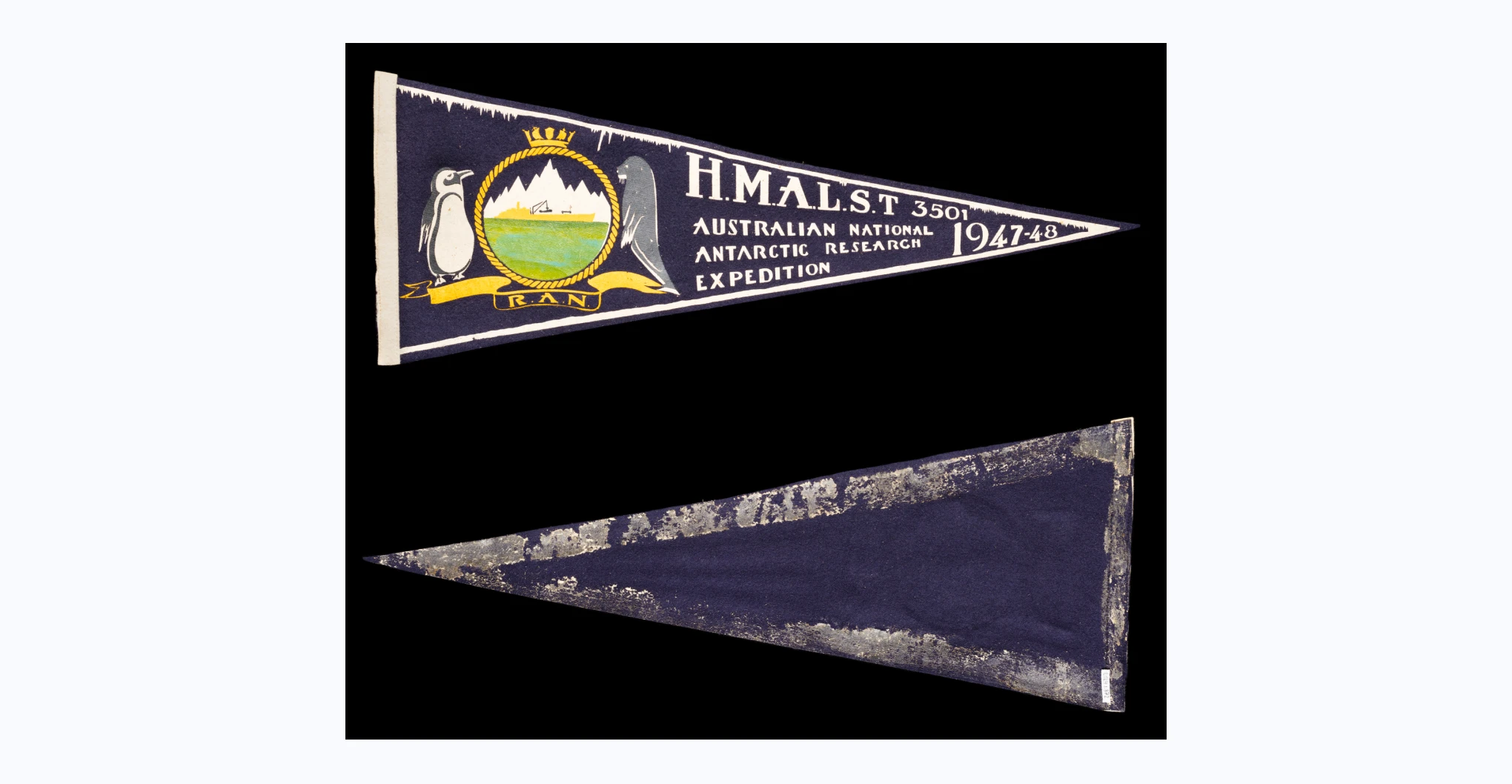
A pennant flag with white text and a white border on a black felt background. On the left side is a coat of arms featuring a crown on top of a braided ring encircling a ship in front of an iceberg. There is a penguin and seal on either side of the ring and text in a banner underneath that reads 'R.A.N.'. On the right it reads 'H.M.A.L.S.T 3501 / AUSTRALIAN NATIONAL / ANTARCTIC RESEARCH / EXPEDITION / 1947-48'. There are two black felt hooks attached at the wider end.
HMALST 3501 pennant, 1947–48. Donated by Alan Balmer
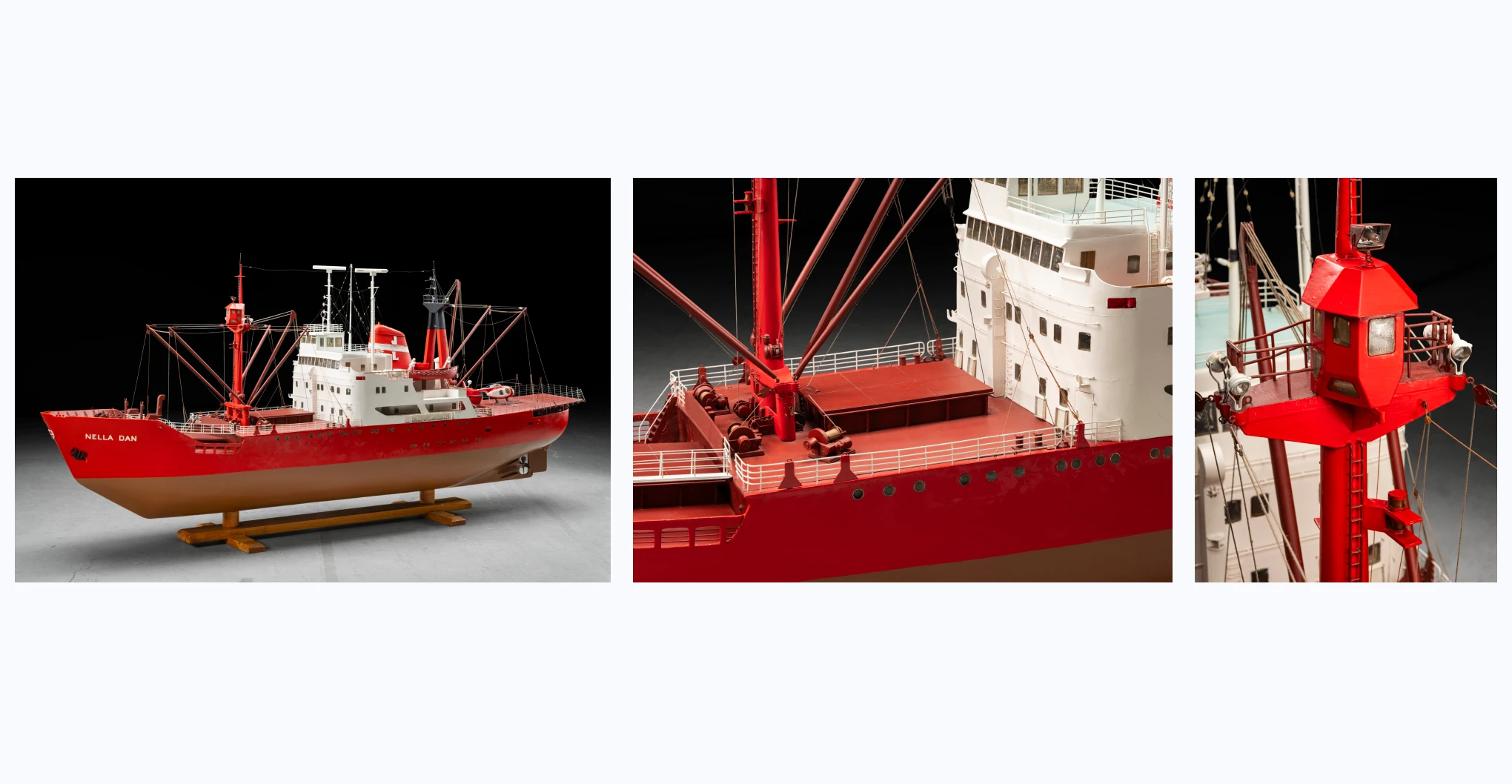
A model of a red and white ship with black trim and brown hull on a wooden stand. There is white text that reads 'NELLA DAN' painted on the stern and proper left side of the bow. The ship includes two masts with rigging, three row boats, one tug boat, brass portholes, propeller, rudder, LED lights, and an electric cable attached to one side of the hull. The model is accompanied by a red and white helicopter with black lettering below its rotor that reads 'VH-BAD'.
Model of the MV Nella Dan, 1971–72. Made and donated by the Ship Modelling Society of Victoria
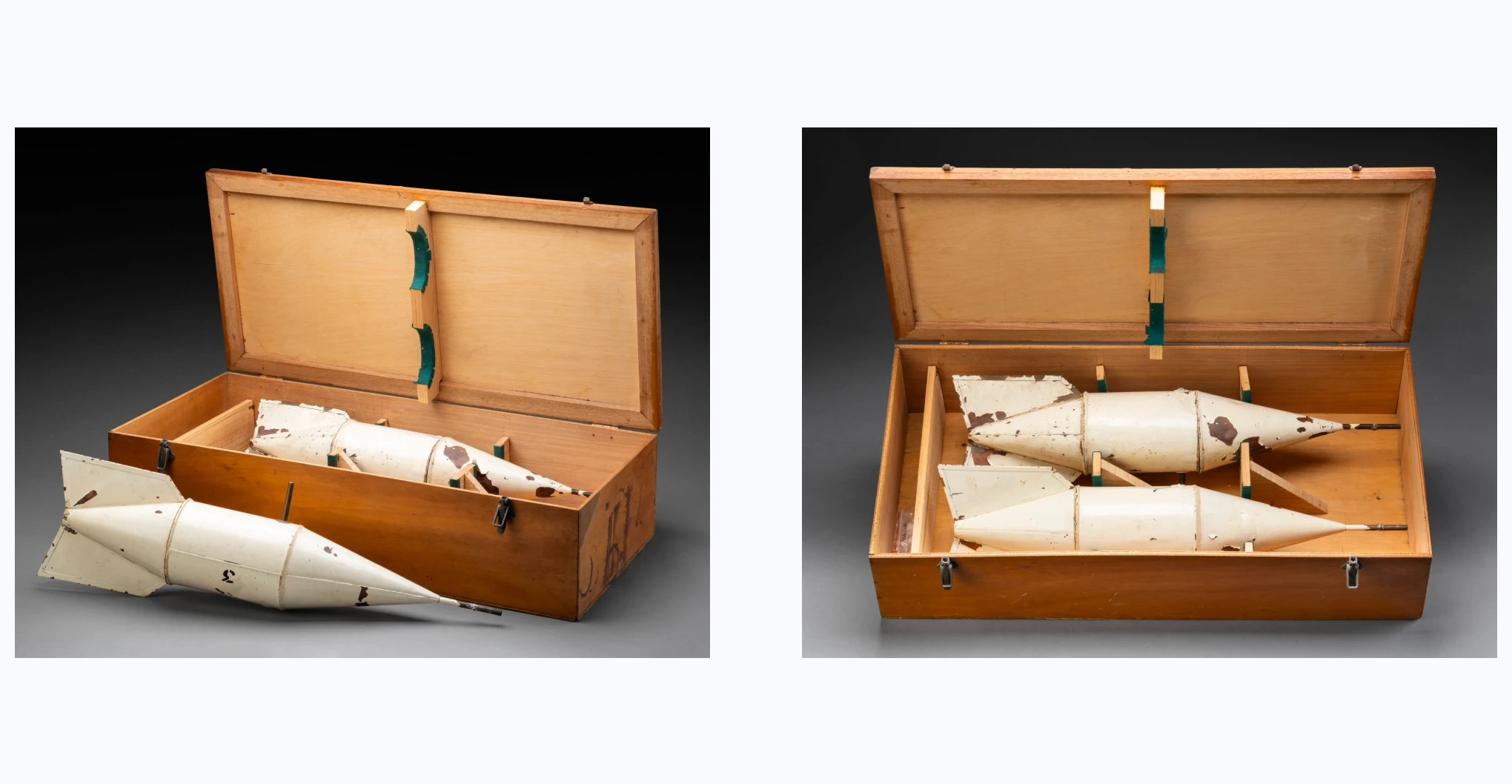
A wooden box housing two snow gauges. The wooden box consists of a hinged lid with two over centre latches. The interior consists of timber framing with green padded lining in the base and underside of the lid. There is also a small compartment to one side of the box. Each snow gauge comprises several sections including a central copper cylinder and two long conical ends. On one end are two metal fins and on the other is a thin metal pipe, one from which a tiny metal pipe has been welded. There is also a thin metal pipe running through the central cylinder near its edge. The gauges are painted cream and feature either a '13' or '3' stencilled in black on their sides.
Snow gauges, 1957
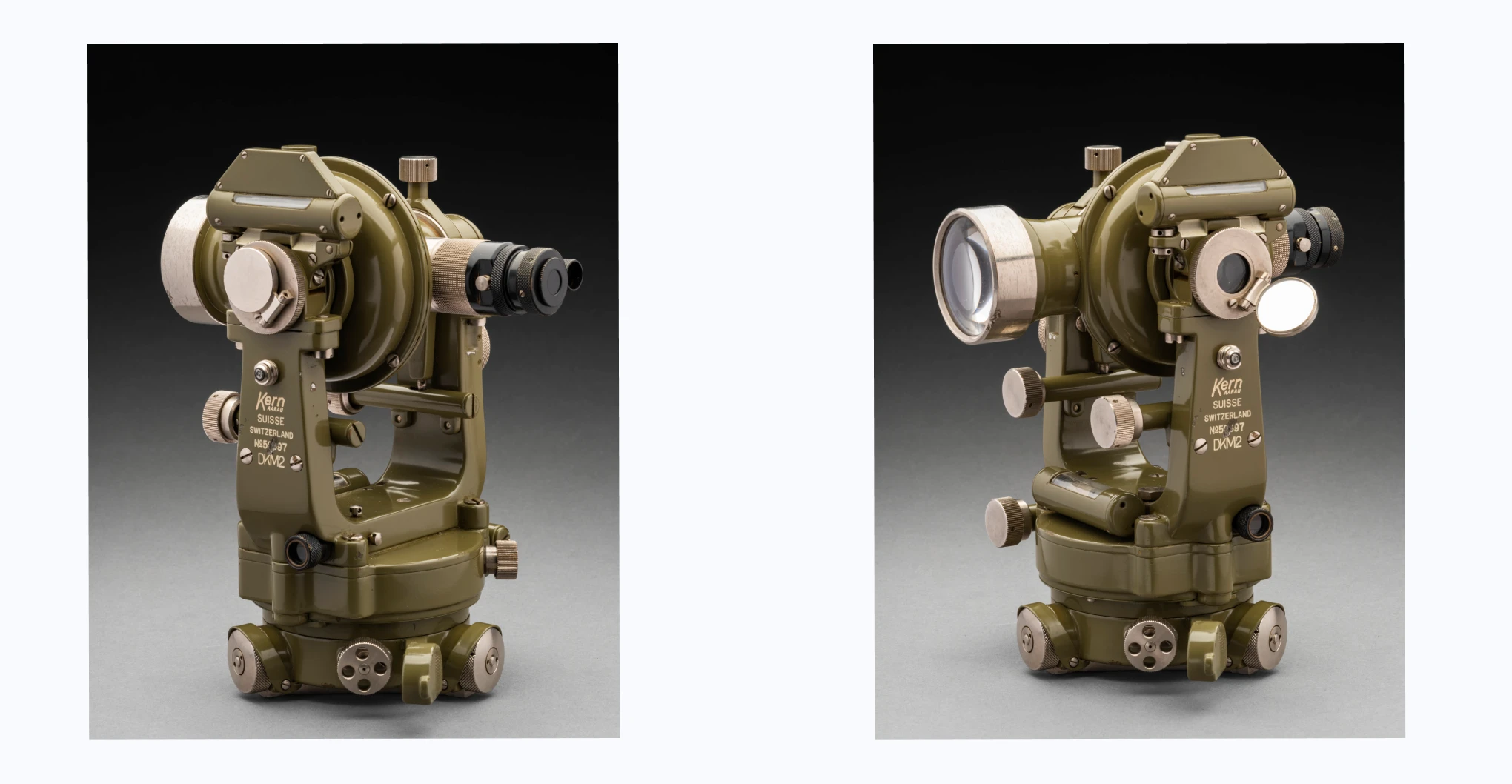
 A green metal theodolite with black and silver fittings. The theodolite has a flat, round base plate (tribach) with levelling screw adjustments and a round, flat rotating main stage which is the telescope mount. There is a horizontal spirit level mounted on the stage. The telescope is mounted between two vertical arms, the bases of which are screwed to the main stage. There is an enclosed vertical degree scale on the side and a spirit level mounted on top. Below the spirit level there is a hinged silver metal flap with a mirror inside.
Theodolite DKM2, 1960s
A red Australian Mole Mink oversnow vehicle with metal tracks reinforced via rubber belting, the letters 'M / M' on the front grill and eight cushions covered in red fabric. There are two windows on the front, sash windows on the driver and front passengers sides, sliding windows on the sides of the back, and a fixed window in the rear door. The cab is made from sheet steel and the interior walls and floor are lined with plywood. On the roof is a hatch and metal brackets. Mounted to the side of the vehicle on the proper right side is a green jerry can with 'ATK' stencilled on the side in black. On either side of the back door are leather straps. Painted around the exterior are images and words including 'fiona', 'A.N.A.R.E.', 'Shane', 'Jane', the Australian flag, and a bird carrying multiple tools and a box labelled 'RESCUE / MINK / SERVIS [sic]'. The bird is flying towards a vehicle with its front end stuck in a crevasse while towing a sledge labelled 'ANARE'. Inside the vehicle are seats and steering levers.
Mole Mink, 1975
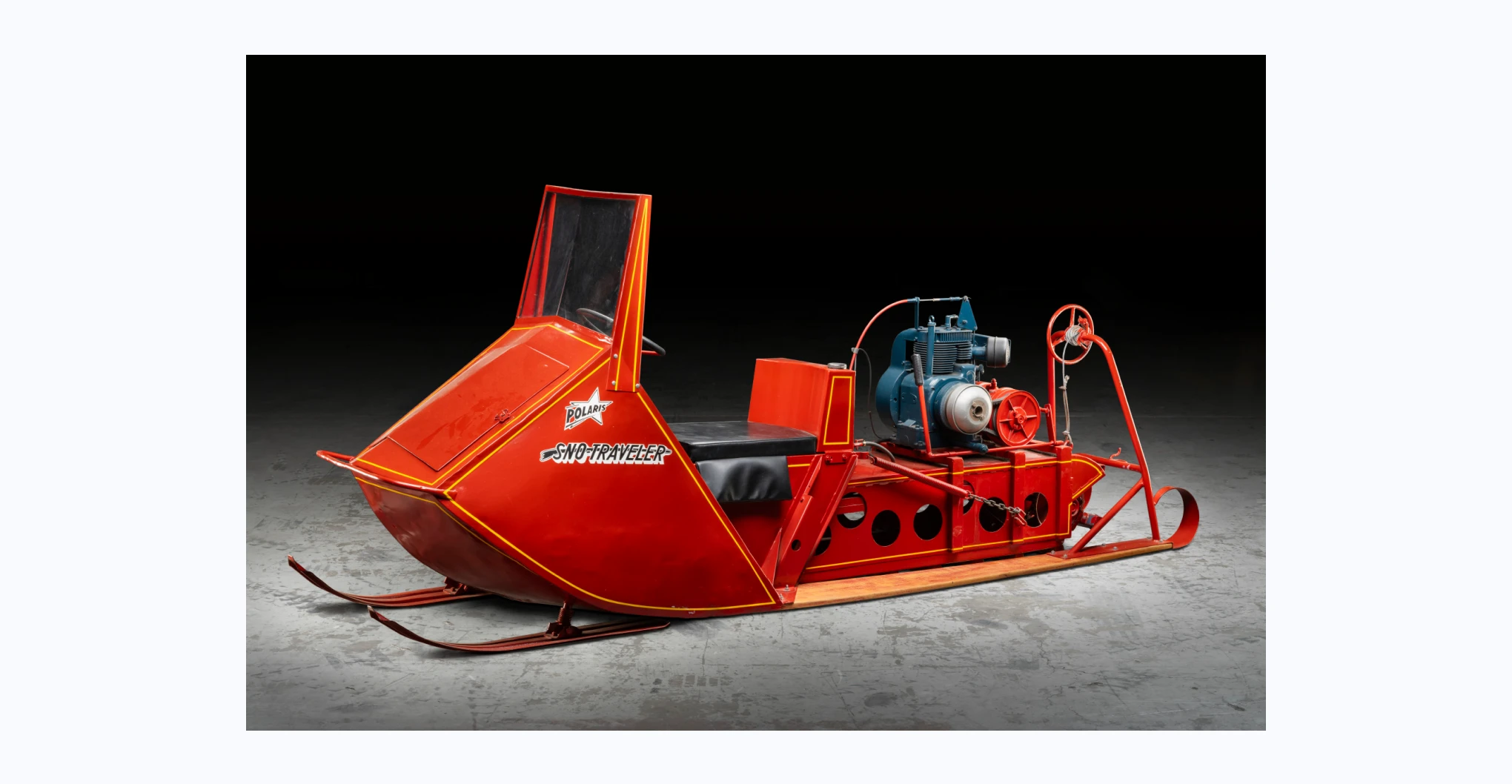
An oversnow vehicle, painted red with yellow pin stripes. The vehicle has metal sledge tracks at the front and a caterpillar track and wooden skis at the back. There is a latched door in front of the windscreen. The open driver’s cab has a half steering wheel, brake and throttle levers and an ignition switch on the right of the dashboard. The driver's seat is upholstered in black leather and the seat back is the fuel container. The engine is mounted behind the fuel container and a winch is mounted on the rear of the wooden skis. Logo with text painted in white and black on the right side reads ‘POLARIS / SNO-TRAVELER’.
Polaris Sno-Traveler K95, 1964. Refurbished by Dave McCormack, 1993
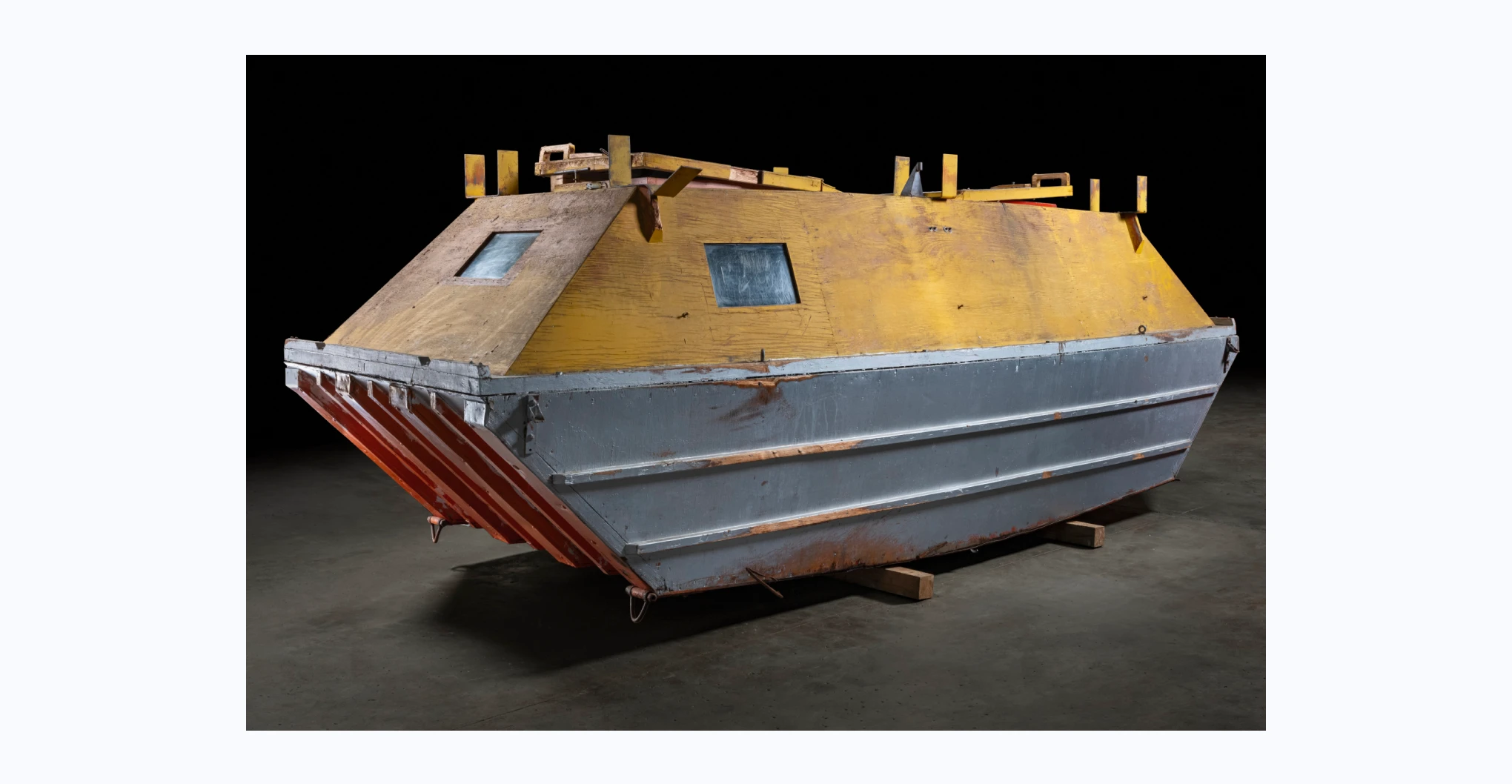
The barge caravan consists of trapezoid shaped top and bottom sections bolted together with ferrous nails and bolts. The top is painted yellow and the bottom orange and silver. The bottom is constructed from plywood and has a slightly curved base and sides with four metal capped hardwood runners running from front to back with three uncapped runners between. Along each side of this section are two rubbing strips.
Barge caravan, 1955. Designed by Bob Dovers

More on accessibility at the Museum

Banner image: Telephone used for interstation communication (detail), Plessey Co, 1940. National Museum of Australia

Return to Top